

What Are 7 Warning Signs of Stress? Symptoms You Should Never Ignore
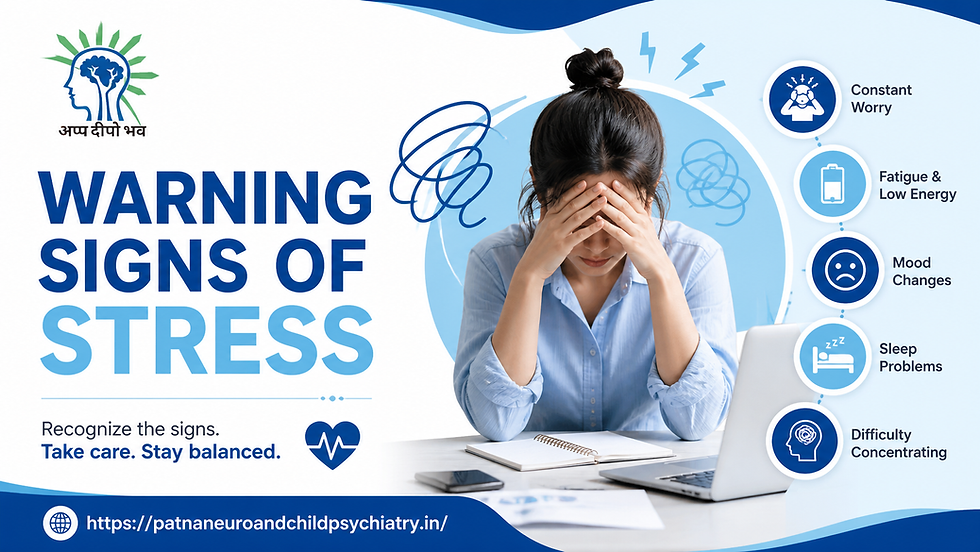
The common stress response from people exists as an invisible force which people only recognize after it begins to harm their physical well-being.
The majority of people miss the initial warning signs of stress because they believe these signs represent momentary pressure.
Your body and mind continuously provide you with alerts about your physical condition. You can establish power over your situation by recognizing these signs at their initial stage.
If ignored for long, it may require proper stress treatment, sometimes even under guidance of a psychiatrist in Patna.
Understanding the Warning Signs of Stress
Before identifying the warning signs of stress, it is important to understand how stress shows up in daily life.
The condition manifests through various patterns which include both visible and hidden symptoms.
The condition demonstrates itself through silent influences which modify your mental state and behavioral patterns and bodily functions.
The experience of stress will produce early indicators which show through your body when you start to feel overwhelmed and irritated because of unexplainable reasons.
7 Warning Signs Of Stress You Should Not Ignore
Stress is more than just feeling overwhelmed — it's a physiological and psychological response that, when chronic, can seriously impact your health.
Here are 7 warning signs you should pay attention to:
1. Constant Fatigue and Low Energy
People who experience stress will commonly develop this condition which makes them feel exhausted after they rest. Your body feels drained because your mind is constantly active and under pressure.
2. Difficulty Sleeping
The experience of finding it hard to sleep combined with frequent night awakenings indicates that your mind remains in a state of tension. Sleep disturbance is often linked to stress and is one of the early symptoms of stress.
3. Frequent Irritability
The experience of becoming angry or frustrated with ease serves as a strong sign that someone needs to control their emotional state. These are also part of the emotional symptoms of stress that people often overlook.
4. Trouble Concentrating
Stress disrupts your capacity to concentrate and your ability to choose solutions. These are clear mental symptoms of stress which affect daily productivity and focus.
5. Physical Discomfort
People with stress experience common physical symptoms which include headaches and muscle tension and stomach issues. These are strong physical symptoms of stress that should not be ignored.
6. Loss of Interest
When you stop deriving pleasure from activities that once brought you joy, this behavior indicates that stress has begun to affect your emotional state.
7. Overthinking and Constant Worry
When your thoughts keep racing through your mind, this behavior indicates that you are experiencing stress. Many people ask how to know if you’re stressed, and constant worry is one of the strongest indicators.
Why You Should Not Ignore Stress
Stressful situations that people ignore lead to severe mental health issues and physical health problems.
The relationship and work performance and health of human beings will deteriorate over time because of the untreated problem.
In some cases, proper stress treatment becomes necessary, especially when symptoms persist and affect daily functioning.
Simple Ways to Manage Stress
Stress can be managed without the need for major lifestyle transformations.
People can achieve stress relief through simple actions which include establishing daily activities and learning to relax and stopping work for brief periods.
Stress reduction can be achieved through talking to a trusted person or participating in activities that bring you joy.
In more severe situations, consultation with a best psychiatrist in Patna AIIMS may help in proper management and recovery.
Conclusion
People commonly experience stress in their lives but they should always treat it as an important matter.
Your body and mind provide you with constant signals about which aspects of your being need to be addressed.
You can protect your health through early detection of warning signs which allow you to take preventative measures.
When needed, stress treatment with professional support can help restore balance and improve overall well-being.
FAQs
1. Can Stress Cause You To Feel Sick?
Stress causes physical health problems which result in illness symptoms. The condition causes headaches and stomach issues and fatigue and it also diminishes immune function. The body experiences stress when it lasts for extended periods. Mental health maintenance prevents these physical symptoms from occurring.
2. How To Recover From Stress?
People who want to recover from stress need to allow their minds and bodies time to rest until they become fully healed. People should practice relaxation techniques which include deep breathing and meditation and light exercise. Proper sleep and nutrition create a healthy routine which helps people maintain their health. People who want to recover faster should talk with others or receive professional help.
3. How To Check Stress Level?
Your stress level can be determined through your thoughts and feelings and physical symptoms. High stress levels show through three main symptoms which include frequent irritability and tiredness and lack of focus. Daily tracking of your mood and habits will reveal the regular patterns which you experience. The best way to handle extreme stress is through professional assistance which will help you build understanding.



Comments